Apr. 16, 2026
In the ever-evolving world of civil engineering, the quest for materials that combine strength with longevity has led to the rise of Glass Fiber Reinforced Polymer. GFRP rebars are rapidly replacing traditional steel reinforcement in critical infrastructure projects worldwide. Unlike steel, which is prone to oxidation and corrosion, GFRP offers a non-corrosive alternative that significantly extends the service life of concrete structures. Whether you are dealing with marine environments or high-salt soil, understanding the advantages of these composites is essential for any modern builder. This guide explores why this material is the future of sustainable and durable construction.
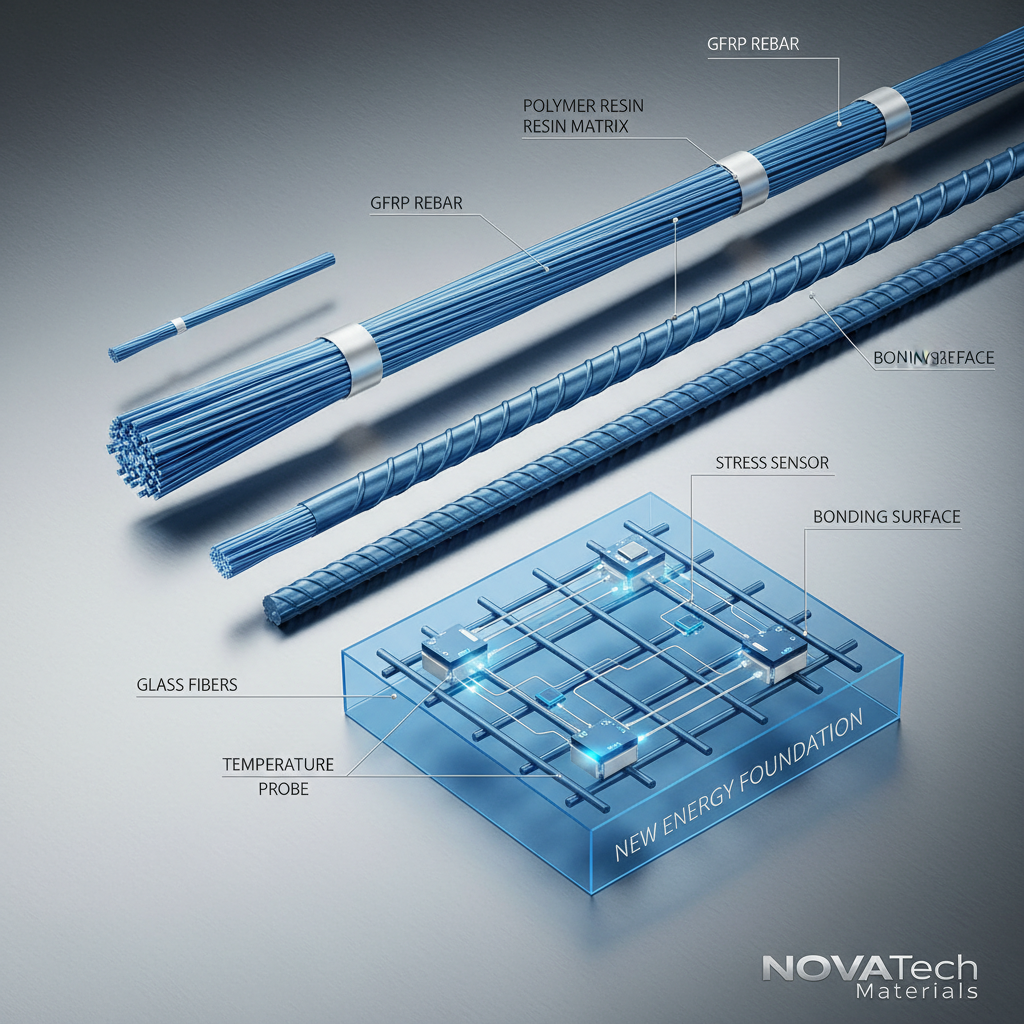
GFRP, which stands for Glass Fiber Reinforced Polymer, is a composite material consisting of high-strength glass fibers embedded in a polymer resin matrix. The fibers provide the necessary tensile strength, while the resin protects the fibers and ensures the load is distributed evenly across the bar. These GFRP rebars are designed to be used as reinforcement in concrete, offering a strength-to-weight ratio that far exceeds that of conventional carbon steel. Because they are electromagnetically neutral, they are also the preferred choice for projects involving sensitive medical equipment or high-voltage power plants.
Pro Tip: The non-conductive nature of GFRP makes it indispensable for airports and MRI rooms where magnetic interference must be zero.
The primary driver behind the adoption of GFRP rebars is their absolute resistance to corrosion. In coastal areas, saltwater penetrates concrete and causes steel to rust, which expands and cracks the concrete from the inside—a process known as spalling. GFRP completely eliminates this risk. Additionally, the lightweight nature of the material reduces transportation costs and allows for faster installation with less heavy machinery, lowering the overall carbon footprint of the construction site.
Key Benefits at a Glance:
• Zero Corrosion: Immune to chlorides and acids.
• Lightweight: Roughly 1/4 the weight of steel.
• High Tensile Strength: Higher ultimate tensile strength than Grade 60 steel.
• Non-Magnetic: Ideal for specialized industrial applications.
To truly understand the impact of switching to GFRP rebars, one must look at the technical data. While steel is isotropic and can be bent on-site, GFRP is an anisotropic material that requires pre-fabricated bends. However, the trade-off is a massive increase in the structure's lifespan, reducing the need for expensive maintenance and repairs every few decades. The following table provides a direct comparison of the two materials.
Because of their unique properties, GFRP rebars are ideally suited for environments where steel would fail prematurely. Marine structures such as seawalls, piers, and jetties are the most common use cases. Additionally, they are widely used in bridge decks to prevent salt-induced corrosion from winter road treatments. In residential construction, they are used for driveways and pool shells. Industrial floors that come into contact with corrosive chemicals also benefit immensely from the switch to polymer reinforcement.
When sourcing GFRP rebars, it is vital to check the specifications to ensure they meet the engineering requirements of your specific project. The bars are typically available in various diameters and surface textures (such as sand-coated or ribbed) to ensure a strong mechanical bond with the concrete. The resin used—usually vinyl ester or epoxy—determines the bar's resistance to specific chemical environments.
Sustainability is no longer an option but a necessity in construction. The use of GFRP rebars contributes to a "green" building approach by drastically reducing the frequency of demolition and reconstruction. When a structure lasts 100 years instead of 40, the total amount of concrete and carbon emissions generated over a century is halved. Furthermore, the lower energy required for transport and installation makes it a logically superior choice for eco-conscious developers.
Choosing GFRP rebars is an investment in the future of your infrastructure. By eliminating the threat of corrosion, reducing labor costs, and enhancing environmental sustainability, GFRP provides a comprehensive solution to the weaknesses of traditional steel. As building codes evolve to embrace composite materials, the transition to GFRP is not just a trend, but a technical necessity for high-performance engineering. Build smarter, build longer, and build with confidence by choosing the right reinforcement.
No, unlike steel, GFRP rebars cannot be bent cold on-site because the glass fibers would snap, compromising the structural integrity of the bar. All bends, hooks, and stirrups must be pre-fabricated by the manufacturer during the pultrusion process. It is critical to plan your reinforcement layout accurately and provide the manufacturer with precise bending schedules before ordering to ensure a perfect fit during installation.
While the initial purchase price per linear foot of GFRP may be higher than standard carbon steel, the total project cost is often lower. This is due to significantly reduced transportation costs (weight reduction), faster installation times, and the elimination of expensive corrosion-protection coatings (like epoxy coating on steel). Most importantly, the lifecycle cost is drastically lower because the structure requires far less maintenance and has a much longer operational lifespan.
GFRP is safe and highly effective for the vast majority of concrete applications, particularly those where corrosion is a threat. However, because it has a different modulus of elasticity than steel, structural engineers must adjust their calculations for deflection and crack width. It is not typically used in structures requiring high ductility (like certain seismic-resistant zones) unless specifically designed for it. Always consult with a licensed structural engineer to ensure the correct specification for your project.
GFRP rebars achieve a strong mechanical bond with concrete through surface engineering. Since smooth polymer surfaces don't bond well, manufacturers use methods such as sand-coating, ribbing, or wrapping the bar in a textured resin. Sand-coating is particularly popular as it provides a high-friction surface that ensures the bar does not slip within the concrete matrix, allowing for efficient load transfer between the concrete and the reinforcement.
Apr. 27, 2026
Benefits of Durable Concrete Fiberglass Rebar for Infrastructure

Apr. 24, 2026
High Strength and Corrosion Resistant glass fibre reinforcement bars
Apr. 23, 2026
Reliable frp walkway manufacturer for Industrial Flooring Solutions
Apr. 22, 2026
Sustainable Construction with High Strength gfrp rebars Guide

Apr. 17, 2026
Advantages and Applications of High Strength Glass Rebar

Apr. 09, 2026
Ultimate Guide to Glass Rebar for Modern Construction Infrastructure
Looking for Reliable Frp Solutions?