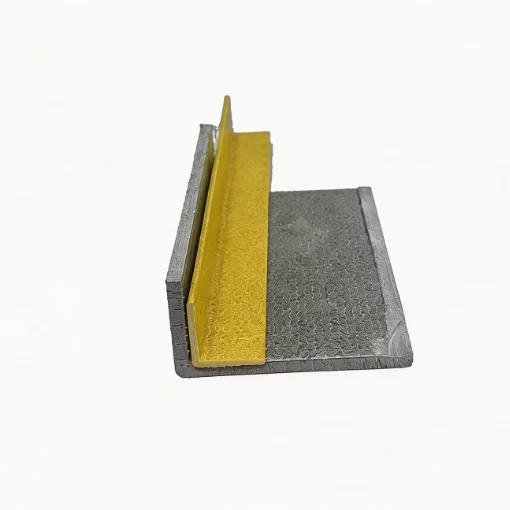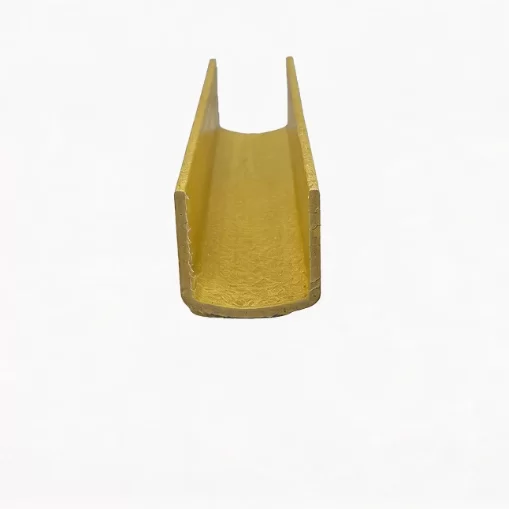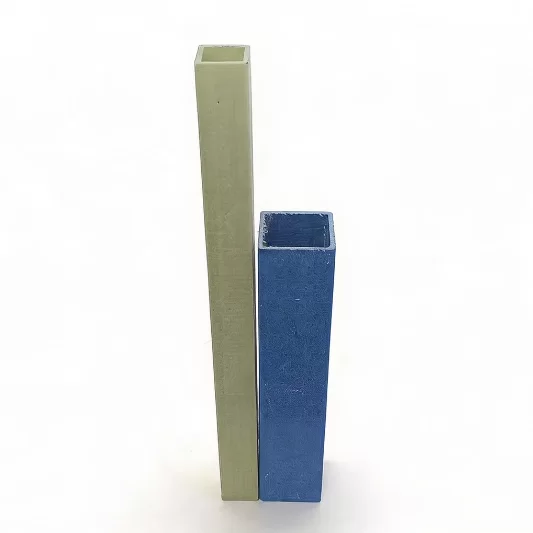
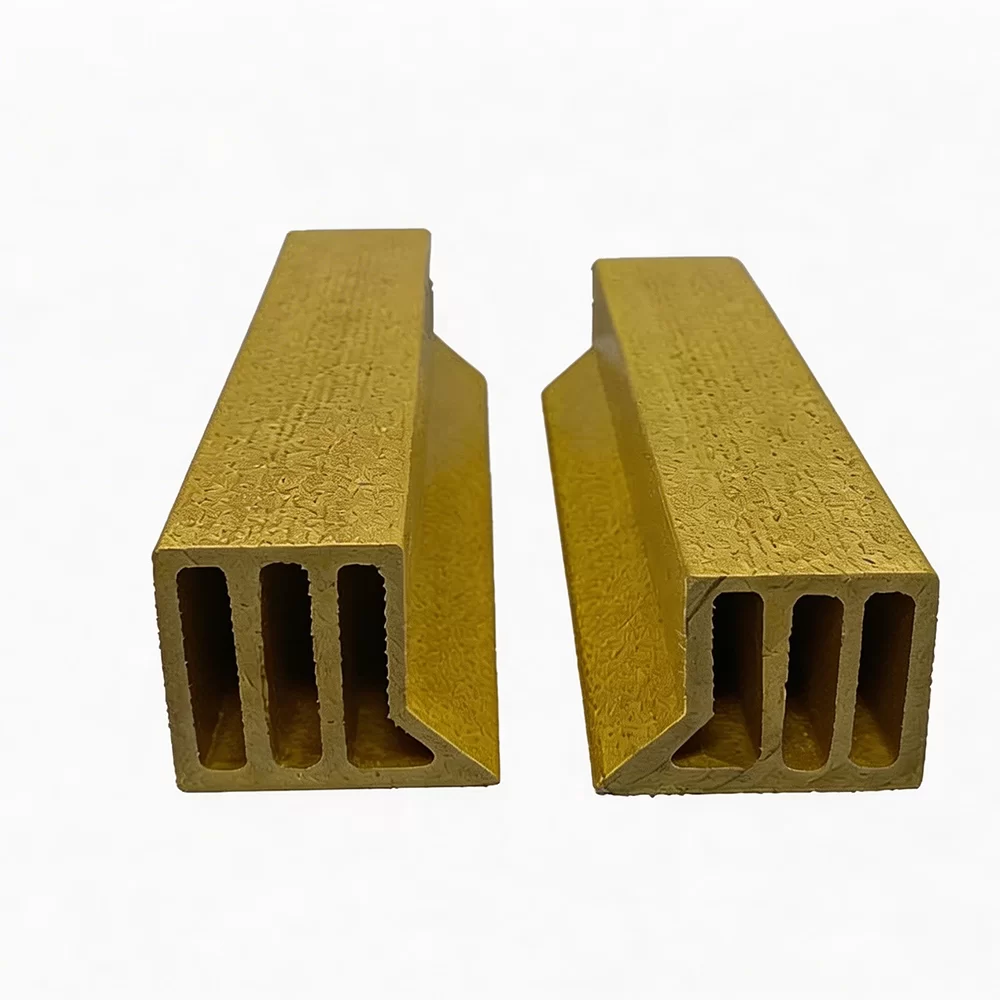
FRP three cavity angular extruded profiles, also known as pultruded three-chamber FRP angles or composite angular profiles, are advanced structural components engineered to provide outstanding mechanical performance, corrosion resistance, and long-term durability. Produced through precision pultrusion, these profiles combine continuous glass fibers and high-quality thermosetting resins to create a material that is lightweight, strong, and maintenance-free. The three-cavity angular design not only increases structural stiffness but also provides excellent load-bearing capacity while reducing material usage and weight.
As industries and architects seek modern, durable, and sustainable alternatives to traditional metals, FRP three cavity angular extruded profiles have become a preferred choice across multiple applications, including industrial frameworks, building structures, electrical supports, and infrastructure projects. Their versatility, non-conductivity, and corrosion resistance make them suitable for environments where metal or wooden profiles would fail or require frequent maintenance.
The defining feature of FRP three cavity angular extruded profiles is their unique three-chamber design. This structure increases rigidity and resistance to bending, twisting, and compression compared to standard single-chamber or solid profiles. The angular shape allows for easy integration with other structural components, providing excellent support for frameworks, racks, partitions, and load-bearing structures.
The pultrusion process ensures consistent fiber alignment and wall thickness, delivering predictable mechanical properties and uniform performance across the length of the profile. Continuous longitudinal glass fibers provide tensile strength, while the resin matrix protects against environmental factors and ensures dimensional stability. This combination results in a lightweight yet highly durable profile that can withstand demanding loads without deformation, making it ideal for both static and dynamic applications.
The hollow three-cavity design also optimizes material usage, reducing overall weight while maintaining structural performance. Lighter profiles simplify handling, transportation, and installation, decreasing labor costs and installation risks.
One of the most practical advantages of FRP three cavity angular extruded profiles is their lightweight nature. Unlike traditional steel or concrete angles, FRP profiles can be easily transported, cut, drilled, and mechanically fastened with standard tools. This allows for rapid installation on-site, reducing labor requirements and installation time.
The hollow three-cavity structure provides a high strength-to-weight ratio, enabling long-span installations without excessive structural support. This is particularly valuable in elevated frameworks, roofing structures, mezzanines, and suspended installations. Lightweight handling also improves safety during construction, reducing the risk of injury and equipment damage.
FRP three cavity angular extruded profiles are widely used in industrial applications that demand durability, corrosion resistance, and high load capacity. They are ideal for supporting frameworks, machinery racks, conveyor systems, cable supports, and protective barriers in chemical plants, power generation facilities, and manufacturing workshops.
The non-conductive and flame-retardant properties of these profiles make them suitable for electrical and telecommunication installations, where safety and insulation are critical. Their resistance to chemicals and moisture ensures long-lasting performance in harsh industrial environments, reducing downtime and maintenance costs. The ability to customize profile dimensions, cavity sizes, and wall thicknesses provides flexibility for specific industrial requirements.
In addition to industrial uses, FRP three cavity angular extruded profiles are increasingly used in architectural and construction projects. Their lightweight, durable, and corrosion-resistant design makes them suitable for roofing supports, window and door frames, handrails, partition walls, and façade accents.
The angular shape allows for easy integration into modular building systems, creating stable frameworks with minimal additional support. Their smooth surfaces and customizable finishes provide aesthetic flexibility, while the structural performance ensures that long-term load-bearing and dimensional stability requirements are met. Architects and designers benefit from the combination of durability, visual appeal, and lightweight construction.
FRP three cavity angular extruded profiles provide inherent safety advantages due to their non-conductive nature. Unlike metal profiles, which can transmit electricity in fault conditions or when exposed to conductive materials, FRP profiles act as effective insulators. This property is particularly valuable for electrical support systems, telecommunication towers, substations, and areas with high-voltage installations.
Additionally, these profiles are flame-retardant, ensuring compliance with fire safety regulations in industrial and commercial buildings. Their dimensional stability under heat and stress prevents deformation, further enhancing safety in applications requiring consistent performance under load.
Investing in FRP three cavity angular extruded profiles offers long-term economic and environmental advantages. Their corrosion and UV resistance significantly reduces maintenance requirements, extending service life and lowering lifecycle costs. Unlike metal profiles, which require frequent painting, coating, or replacement, FRP profiles maintain performance over decades.
The pultrusion manufacturing process is highly efficient, minimizing material waste and producing consistent quality. The lightweight nature of the profiles reduces transportation energy and labor requirements, contributing to sustainable construction practices. By selecting FRP three cavity angular extruded profiles, engineers, designers, and project managers can create durable, low-maintenance, and environmentally responsible structures that deliver long-term value.
FRP three cavity angular extruded profiles represent a high-performance, versatile, and sustainable solution for modern industrial, architectural, and infrastructural projects. Their combination of lightweight design, high strength, corrosion resistance, non-conductivity, and installation flexibility makes them superior to traditional steel, aluminum, or wooden profiles.
Whether used for industrial frameworks, construction supports, electrical installations, or architectural accents, these profiles deliver durability, safety, and aesthetic value while reducing maintenance and lifecycle costs. Customizable dimensions, cavity sizes, wall thicknesses, and finishes ensure that FRP three cavity angular extruded profiles can meet a wide range of project specifications, providing reliable and long-lasting performance in even the most demanding environments.
Choosing FRP three cavity angular extruded profiles ensures structural reliability, safety, and efficiency, making them the ideal choice for modern engineering, construction, and industrial applications.
Apr. 27, 2026
Benefits of Durable Concrete Fiberglass Rebar for Infrastructure
Apr. 24, 2026
High Strength and Corrosion Resistant glass fibre reinforcement bars
Apr. 23, 2026
Reliable frp walkway manufacturer for Industrial Flooring Solutions
Apr. 22, 2026
Sustainable Construction with High Strength gfrp rebars Guide

Apr. 17, 2026
Advantages and Applications of High Strength Glass Rebar
Apr. 16, 2026
The Ultimate Guide to GFRP Rebars for Modern Construction
Looking for Reliable Frp Solutions?