
Navigating the complexities of wastewater management often begins with a critical, yet challenging question: how much capacity is truly required for your specific site? Incorrectly estimating the required volume can lead to catastrophic system failures, regulatory non-compliance, and severe environmental contamination. For engineers, project managers, and contractors, locking down the precise specifications early in the design phase is non-negotiable to ensure long-term operational stability.
That is where precision manufacturing steps in to bridge the gap between initial planning and flawless execution. At Hebei Zhongtai Composite Material Co., Ltd., we understand that standard, off-the-shelf volumes do not fit every industrial or residential blueprint. Drawing from extensive expertise in pultrusion, molding, and hand lay-up processes, our modern production workshops deliver highly customized composite solutions designed around your exact capacity requirements.
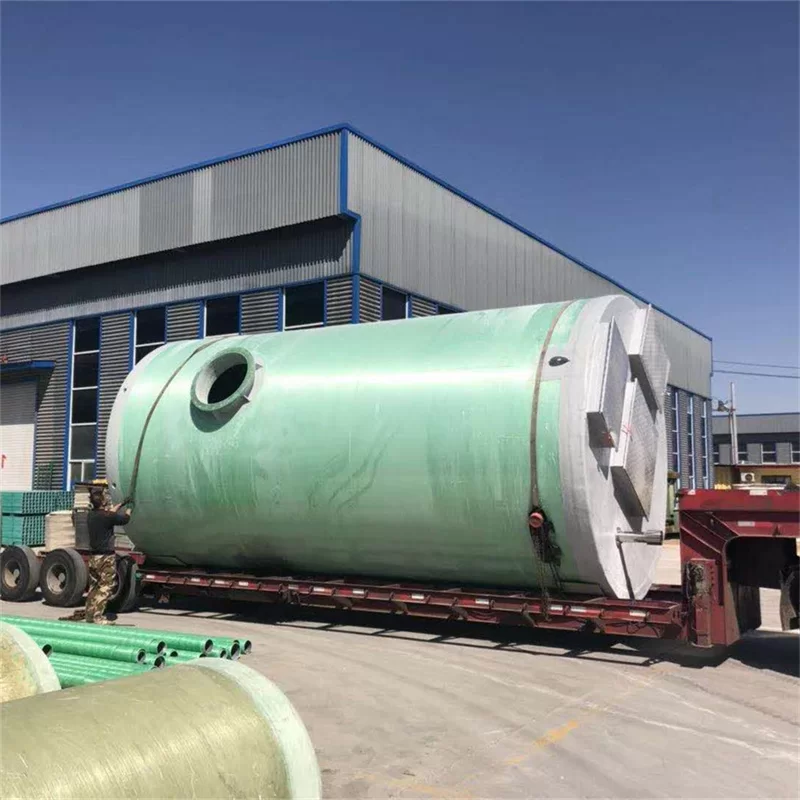
Whether your project demands a compact footprint for a confined space or massive scalability for large-scale municipal engineering, identifying the right fiberglass septic tank sizes or dimensions is critical. Backed by a strict quality management system and compliance with international industrial standards, we ensure that every custom tank we fabricate offers an unparalleled strength-to-weight ratio, guaranteed anti-aging properties, and the structural integrity needed for demanding global environments.
When scaling environmental infrastructure, raw material quality and fabrication techniques must evolve to support varying capacities. Designing scalable containment vessels requires rigorous engineering frameworks, ensuring that an increase in volume does not compromise structural durability or underground pressure resistance. Our dedicated development of high-quality FRP (Fiber Reinforced Polymer) guarantees that every dimension specified functions exactly as engineered.
Below is a detailed breakdown of how our manufacturing standards directly support and enhance different capacity requirements, ensuring your selected fiberglass septic tank sizes or dimensions perform flawlessly under real-world stresses.
| Performance Metric | Industry Significance | Our Engineering Standard | Advantage |
|---|---|---|---|
| Structural Scalability | Prevents sidewall collapse in larger tanks under heavy soil loads. | Integrated pultrusion & hand lay-up processes for reinforced wall thickness. | Allows for expansive, custom volumetric designs without sacrificing structural safety. |
| Corrosion Resistance | Ensures long-term containment of harsh chemical and biological waste. | Premium FRP matrices dedicated to industrial-grade chemical resistance. | Extends the functional lifespan of any customized footprint, reducing replacement frequency. |
| Weight Optimization | Heavy tanks inflate shipping and installation logistics costs. | High strength-to-weight ratio composite materials. | Makes even the largest dimensions easier and more cost-effective to transport and install globally. |
| Dimensional Precision | Inaccurate sizing causes fitting issues with connecting pipelines. | Strict quality management system compliant with international industrial standards. | Ensures exact matching of specified geometries, eliminating on-site installation delays. |
Strategic infrastructure investments require a clear view of the total cost of ownership (TCO). While the initial material cost is an important factor, the true financial advantage lies in minimizing installation hours, heavy machinery requirements, and decades of maintenance. By aligning your project with highly accurate and perfectly scaled systems, you dramatically reduce operational downtime and premature structural failures.
Serving global clients across construction, wastewater treatment, and chemical industries—from North America and Europe to Southeast Asia and the Middle East—we have proven that utilizing precise fiberglass septic tank sizes or dimensions yields measurable financial returns. Because our customized composite solutions are significantly lighter yet equally as strong as traditional concrete alternatives, our clients enjoy expedited project timelines and slashed logistical overhead.
The data visualization above illustrates the progressive lifecycle cost savings achieved when shifting from standard concrete structures to accurately sized FRP solutions. By leveraging optimized dimensions tailored to the exact site demands, organizations not only lower up-front installation expenses but also virtually eliminate the severe mid-lifecycle repair costs commonly associated with inferior materials.
Related products
Top Selling Products