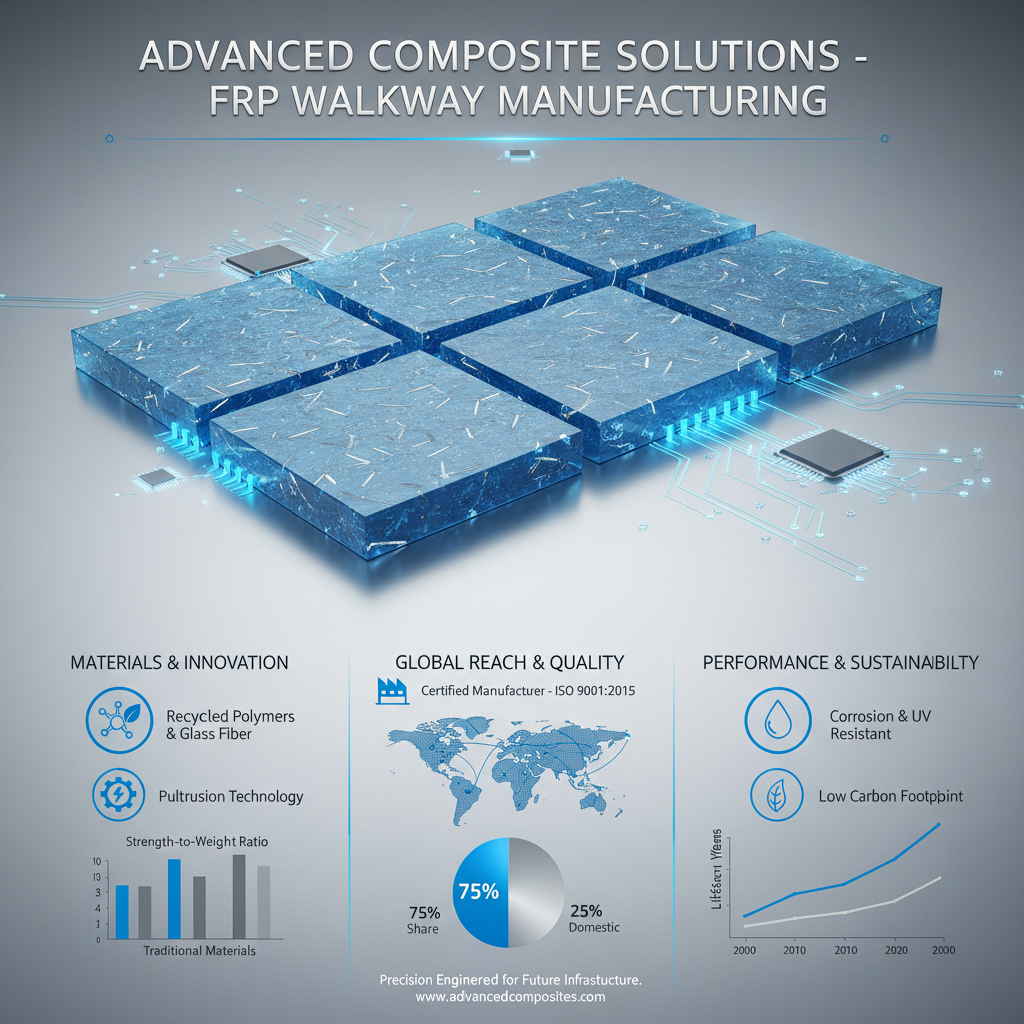
Selecting a reliable frp walkway manufacturer is a critical decision for industries operating in harsh environments where traditional materials like steel and aluminum fail. Fiber Reinforced Polymer (FRP) has emerged as the gold standard for industrial flooring and walkways due to its extraordinary resistance to corrosion and high strength-to-weight ratio, ensuring operational safety and longevity.
In the global push toward sustainable infrastructure, the role of an experienced frp walkway manufacturer extends beyond mere production; it involves engineering solutions that reduce lifecycle costs and minimize environmental impact. By integrating advanced composite resins and glass fibers, these manufacturers provide walkways that eliminate the need for constant painting or galvanizing, which are common pain points in heavy industry.
Understanding the nuances of FRP fabrication—from pultrusion to molded grating—allows facility managers to optimize their assets for maximum durability. Whether it is for chemical plants, offshore platforms, or wastewater treatment facilities, partnering with a specialized frp walkway manufacturer ensures that every square meter of walking surface meets rigorous international safety and load-bearing standards.

Global Industry Context of FRP Walkways
The global industrial landscape is currently facing a crisis of corrosion. According to data from organizations like ISO and various industrial safety boards, the cost of corrosion in the oil, gas, and chemical sectors runs into billions of dollars annually. This systemic failure of traditional metallic structures has accelerated the demand for a professional frp walkway manufacturer who can provide non-corrosive alternatives.
As industries migrate toward "Zero Maintenance" philosophies, the shift toward composite materials has become an economic necessity rather than a luxury. The ability of FRP to withstand sulfuric acid, saltwater, and extreme temperature fluctuations makes it indispensable for modern infrastructure projects worldwide.
Defining the FRP Walkway Manufacturer Role
An frp walkway manufacturer is more than a supplier; they are materials scientists and structural engineers. These entities specialize in the synthesis of thermosetting resins (such as polyester, vinyl ester, or epoxy) and reinforcement fibers (typically E-glass) to create walking surfaces that possess the strength of steel but a fraction of the weight.
In simple terms, these manufacturers transform raw liquid resins and glass rovings into high-performance gratings, planks, and profiles. This process ensures that the resulting walkways are non-conductive, non-magnetic, and completely immune to the rust and decay that plague carbon steel in humid or chemical-rich environments.
This role is intrinsically linked to humanitarian and safety needs, as secure footings in industrial zones prevent thousands of workplace accidents annually. By providing slip-resistant surfaces and structural integrity, a dedicated frp walkway manufacturer contributes directly to the Occupational Health and Safety (OHS) standards of the global workforce.
Core Components of High-Quality FRP Systems
The first pillar of quality for any frp walkway manufacturer is Material Durability. This involves the precise selection of resin types; for example, vinyl ester is used for high-corrosion environments, while orthophthalic polyester suffices for general-purpose walkways.
Secondly, Load-Bearing Scalability is crucial. A professional frp walkway manufacturer ensures that the glass fiber orientation is optimized to handle specific span lengths and weight loads, preventing deflection or structural failure under heavy industrial traffic.
Finally, Surface Ergonomics, including grit-top or concave finishes, are integrated to provide maximum traction. These safety features, engineered by the frp walkway manufacturer, ensure that walkways remain safe even when coated in oil or water.
Comparative Analysis of Manufacturing Methods
Different production techniques used by an frp walkway manufacturer significantly impact the performance and cost of the final product. Pultrusion is the most common method for profiles, offering high longitudinal strength, while molded grating provides superior multi-directional stability for heavy-duty floors.
Choosing the right method depends on the balance between installation speed, load requirements, and budget. A versatile frp walkway manufacturer will often combine these methods to provide a complete system including beams, grating, and stair treads.
Performance Ratings by FRP Production Method
Global Applications and Real-World Use Cases
In the energy sector, particularly in offshore wind farms and oil rigs, the products of an frp walkway manufacturer are vital. The saline atmosphere of the ocean destroys steel in months, but FRP remains inert, ensuring that technicians can access critical machinery without risking structural collapse.
Similarly, in municipal wastewater treatment plants across North America and Europe, FRP walkways are the default choice. Because these facilities handle corrosive chemicals and moisture 24/7, the expertise of an frp walkway manufacturer helps cities build infrastructure that lasts 30+ years without significant repair.
Long-Term Value and Sustainability Benefits
The primary advantage of sourcing from a reputable frp walkway manufacturer is the dramatic reduction in Total Cost of Ownership (TCO). While the initial purchase price may be slightly higher than galvanized steel, the elimination of painting, sanding, and rust-treatment labor results in a net saving over a 10-year cycle.
From a sustainability perspective, FRP is increasingly viewed as an eco-friendly alternative. Many an frp walkway manufacturer now utilizes low-VOC resins and implements recycling programs for composite offcuts, reducing the carbon footprint of industrial construction.
Beyond the numbers, there is an emotional value in safety and trust. Knowing that a walkway is non-conductive provides peace of mind to electrical workers, while the non-slip surfaces provide dignity and security to workers in high-risk zones, fostering a culture of safety.
Future Trends in Composite Walkway Technology
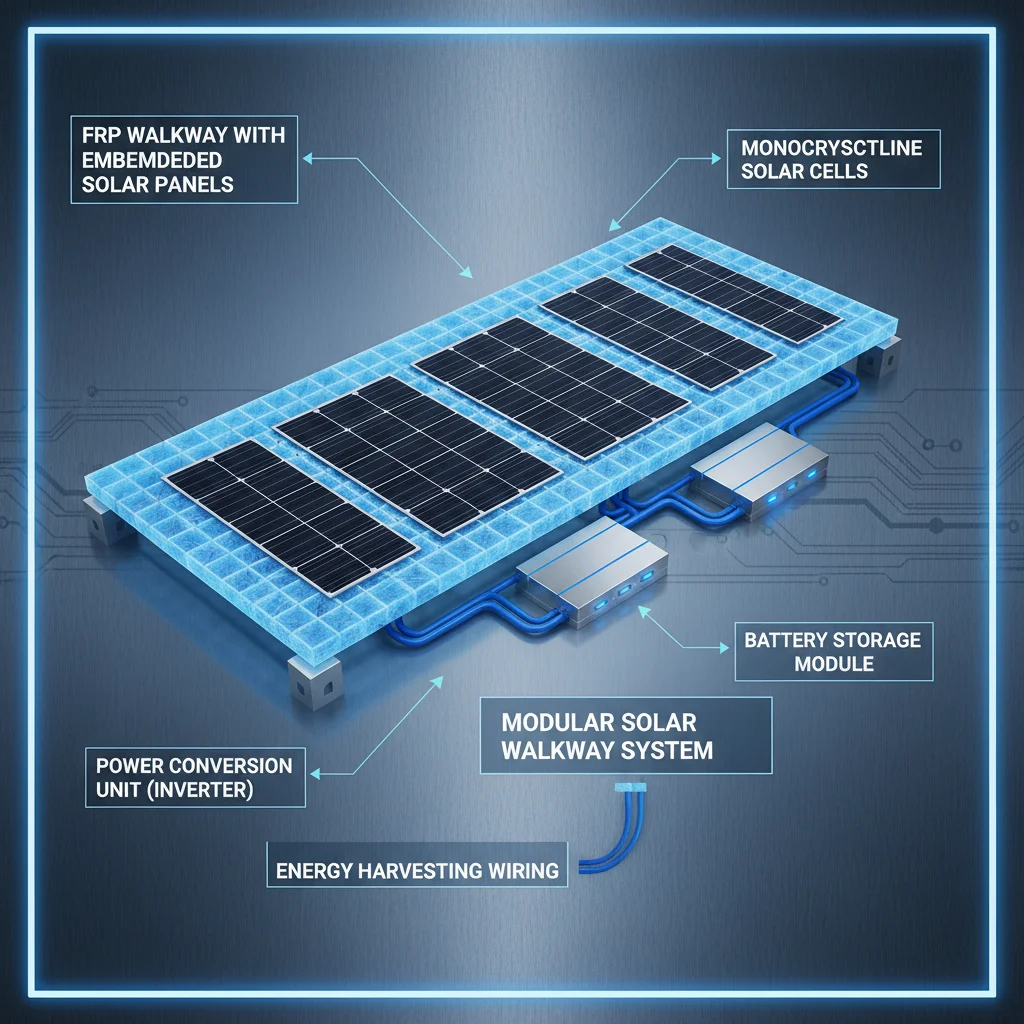
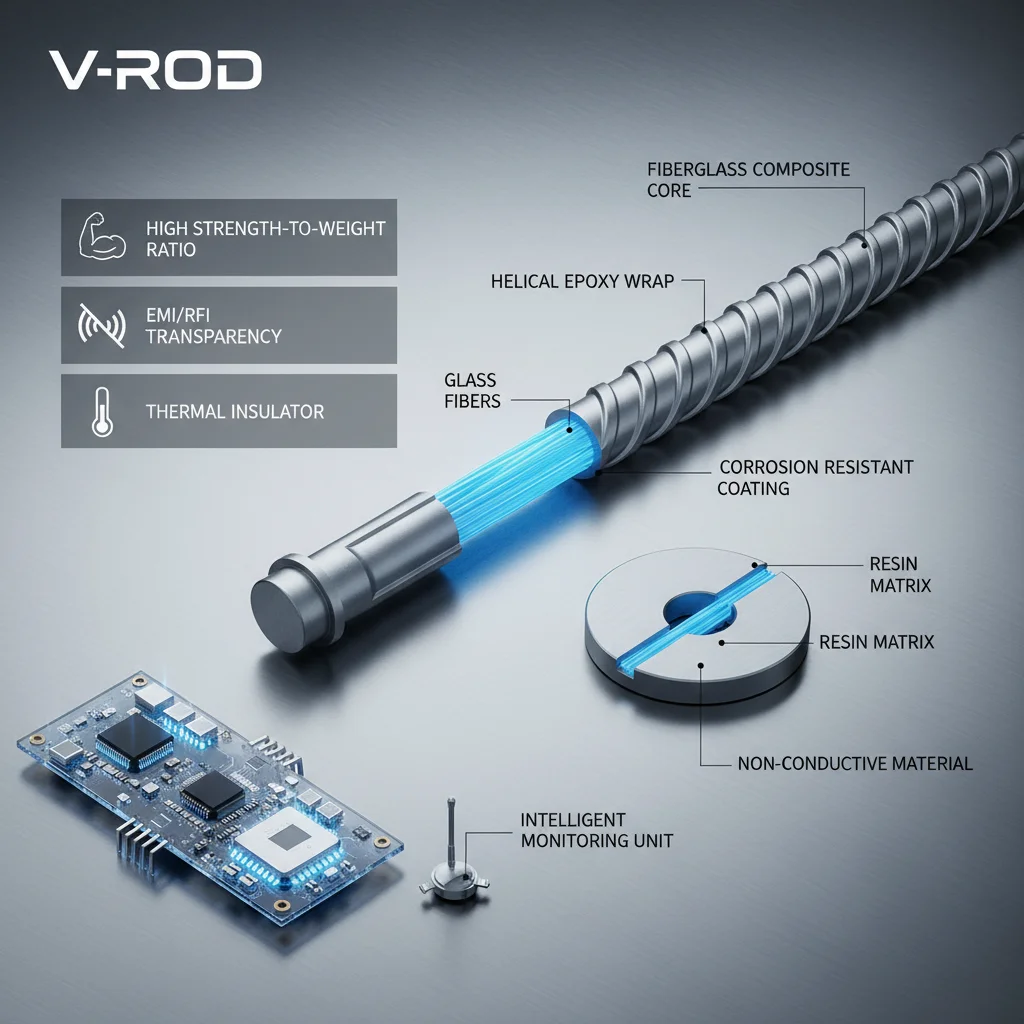
The next frontier for the frp walkway manufacturer is the integration of "Smart Composites." We are seeing the emergence of FRP walkways with embedded sensors that can detect structural fatigue or temperature changes, alerting managers to maintenance needs before a failure occurs.
Digital transformation is also hitting the manufacturing floor. Advanced automation and 3D printing of composite molds allow an frp walkway manufacturer to create bespoke, complex geometries that were previously impossible, reducing waste and installation time.
Furthermore, the shift toward bio-resins—derived from plant-based sources rather than petroleum—is becoming a priority. This evolution ensures that the frp walkway manufacturer can meet the stringent ESG (Environmental, Social, and Governance) goals of Fortune 500 companies.
Technical Specification Comparison for FRP Walkway Systems
| Material Grade |
Corrosion Resistance |
Load Capacity |
Lifespan (Years) |
| Standard Polyester |
Moderate |
Medium |
15-20 |
| Vinyl Ester (Industrial) |
High |
High |
25-30 |
| Epoxy Composite |
Very High |
Extreme |
30-50 |
| UV-Stabilized FRP |
Moderate |
Medium |
20-25 |
| Fire-Retardant Grade |
High |
High |
25-30 |
| Carbon-Hybrid FRP |
Extreme |
Ultra-High |
50+ |
FAQS
Look for a manufacturer that provides full material certifications (ASTM or ISO) and has a proven track record in your specific industry. A quality frp walkway manufacturer should be able to provide load-span tables and offer resin customization based on the chemicals present in your environment.
The initial material cost is often higher for FRP. However, when you factor in the lack of painting, the reduced installation time due to lower weight, and the absence of corrosion-related replacements, an frp walkway manufacturer's solution is typically 30-50% cheaper over a 20-year lifecycle.
Yes, but it depends on the resin. A specialized frp walkway manufacturer can use specific resins that maintain structural integrity from -40°C to over 100°C. Always specify your temperature range during the quoting process to ensure the correct glass-transition temperature (Tg) is met.
Absolutely. Most an frp walkway manufacturer offers integrated grit surfaces (silica sand or aluminum oxide) that are bonded to the surface during curing. This provides a high coefficient of friction even in oily or wet conditions, far exceeding the safety of smooth steel.
Installation is significantly faster than steel. Because FRP is lightweight, it often requires no heavy lifting equipment. A professional frp walkway manufacturer provides pre-cut kits and easy-to-use composite fasteners, reducing onsite labor by up to 60%.
FRP is more sustainable than steel because it requires less energy for transport and zero toxic anti-corrosion coatings over its life. Many a leading frp walkway manufacturer is now implementing closed-loop recycling for scrap materials, further enhancing its green profile.
Conclusion
In summary, partnering with a professional frp walkway manufacturer is a strategic investment in safety, efficiency, and sustainability. From the selection of high-performance resins to the implementation of slip-resistant surfaces, FRP solves the age-old problem of industrial corrosion while offering a superior strength-to-weight ratio that simplifies installation and reduces long-term maintenance costs.
As we look toward the future of industrial infrastructure, the integration of smart sensors and bio-based resins will only further solidify FRP's position as the premier choice for walkways. We encourage facility managers and engineers to move away from the cycle of "rust and replace" and embrace the permanent durability offered by composite materials. For high-quality, engineered solutions, visit our website: www.hbztcomposite.com.